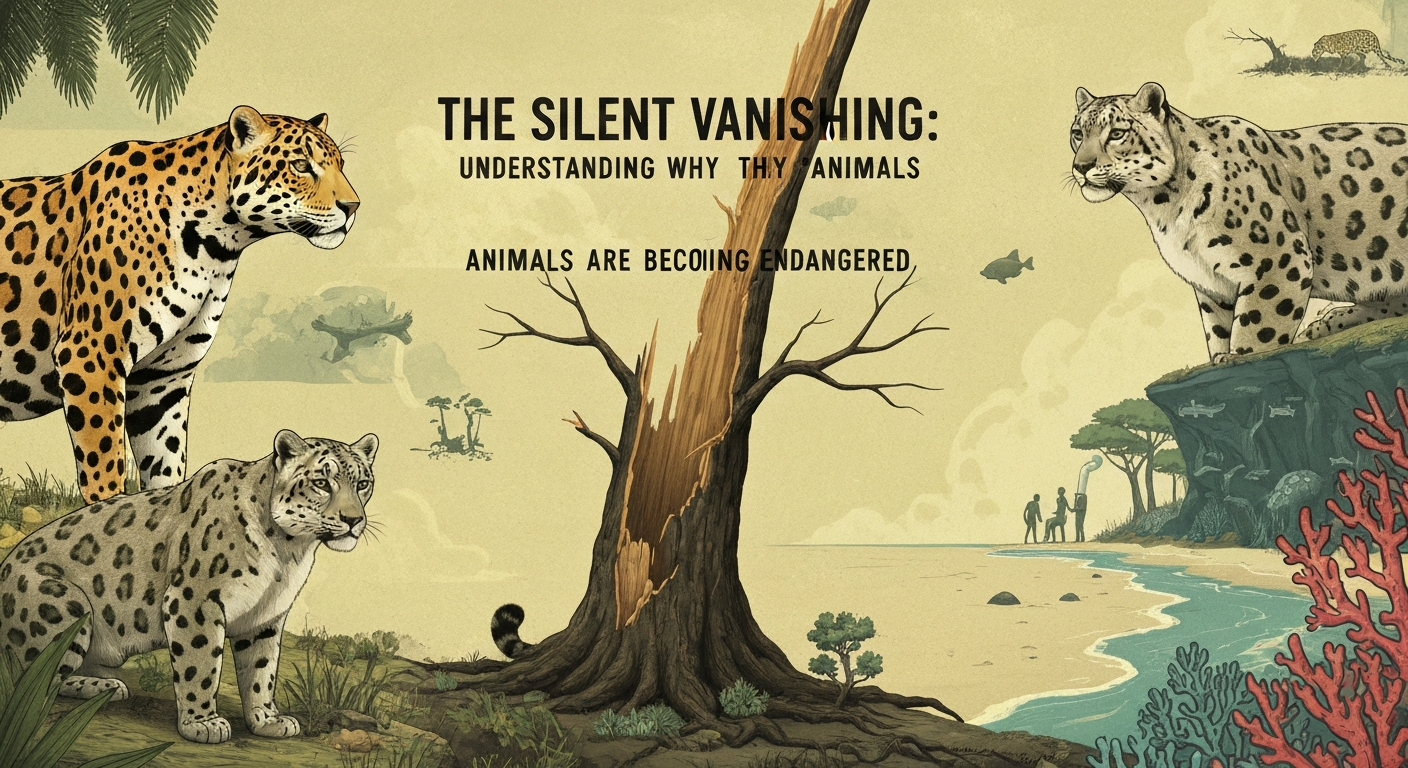
From the majestic African elephant to the vibrant coral reefs, our planet is home to an astonishing array of life. Every species plays a unique role in the intricate web of ecosystems, contributing to the health and stability of our world. However, beneath this breathtaking diversity lies a sobering reality: countless animal species are disappearing at an unprecedented rate. The term "endangered" has become alarmingly common, signaling a crisis that demands our immediate attention. But what does it truly mean for a species to be endangered, and why is this happening with such urgency?
In this post, we'll explore the critical factors driving animals towards the brink of extinction, the far-reaching consequences of their disappearance, and what steps are being taken—and can be taken—to safeguard the future of our planet's precious wildlife.
What Does "Endangered" Really Mean?
When we talk about an animal being "endangered," we're referring to a species that faces a very high risk of extinction in the wild. This classification comes from organizations like the International Union for Conservation of Nature (IUCN), which maintains a "Red List" detailing the conservation status of species worldwide. Below "endangered" are categories like "vulnerable," meaning a high risk of endangerment, and above it is "critically endangered," signifying an extremely high risk of extinction. The ultimate and irreversible stage, of course, is "extinct."
The Alarming Rate of Species Loss
While extinction is a natural part of evolution, the current rate of species loss is anything but natural. Scientists estimate that species are going extinct at 1,000 to 10,000 times the natural background rate. This accelerated decline is primarily driven by human activities, marking what many refer to as the "sixth mass extinction event" in Earth's history – the first one caused by a single species: ours.
Primary Causes of Endangerment
The threats to wildlife are complex and often interconnected, but several key factors stand out as major drivers of endangerment:
Habitat Loss and Degradation
This is arguably the single greatest threat to biodiversity. As human populations grow, we clear forests for agriculture, build cities, construct roads, and convert natural landscapes for various developments. This destruction and fragmentation of habitats leave animals with nowhere to live, hunt, breed, or raise their young. Species like orangutans, tigers, and giant pandas are severely affected by the loss of their forest homes.
Climate Change
Global warming is altering ecosystems faster than many species can adapt. Rising temperatures lead to melting ice caps (threatening polar bears), ocean acidification (harming coral reefs and marine life), and more frequent extreme weather events like droughts and floods. These changes disrupt food sources, alter migration patterns, and create unsuitable conditions for survival.
Pollution
Our environment is increasingly burdened by pollution. Plastic waste chokes marine animals, pesticides poison insects and birds, and industrial chemicals contaminate water sources, making them toxic for countless species. Light and noise pollution can also disorient nocturnal animals and disrupt delicate ecosystems.
Poaching and Illegal Wildlife Trade
Despite international laws, the illegal trade in wildlife parts (like ivory from elephants, rhino horn, and pangolin scales) and exotic pets remains a multi-billion-dollar industry. This illicit activity directly decimates populations of many charismatic and highly sought-after species, pushing them to the edge of extinction for profit.
Invasive Species
When non-native species are introduced to an ecosystem (often by humans, accidentally or intentionally), they can outcompete native species for resources, introduce new diseases, or prey upon vulnerable local populations. This has been a particular problem for island ecosystems, where native species have often evolved without natural defenses against new predators.
Why Should We Care? The Ripple Effect
The loss of animal species isn't just a tragedy for the animals themselves; it has profound implications for all life on Earth, including humans:
Ecosystem Imbalance: Each species plays a role. The loss of pollinators can affect crop yields, the disappearance of predators can lead to overpopulation of prey, and the destruction of keystone species can cause entire ecosystems to collapse.
Economic Impact: Healthy ecosystems provide invaluable services, from clean water and air to natural pest control. Biodiversity also drives eco-tourism, supporting local economies in many regions.
Medical Discoveries: Many medications, including those for cancer and heart disease, have been derived from plants and animals. Losing species means losing potential cures and scientific breakthroughs.
Ethical Responsibility: As the dominant species on the planet, many believe we have a moral obligation to protect the diverse life forms with whom we share this world.
Conclusion: A Call to Action
The plight of endangered animals is a clear indicator of the health of our planet. The accelerating rate of species loss is a complex issue driven by multiple human-induced factors, from habitat destruction to climate change and illegal trade. Understanding these causes is the first step towards effective solutions.
While the challenges are immense, there is hope. Conservation efforts, driven by dedicated scientists, local communities, and international organizations, are making a difference. As individuals, we can contribute by supporting ethical businesses, reducing our carbon footprint, advocating for wildlife protection, and educating ourselves and others about these critical issues. The future of our planet's magnificent wildlife depends on collective action and a renewed commitment to coexistence. It's not just about saving animals; it's about preserving the delicate balance that sustains us all.